The Marketing Budget Meeting Nobody Wants to Have
If your 2027 marketing budget looks like your 2023 budget with a bigger number, it is costing you more every year you don’t revisit it. Buyers now discover and vet brands through AI search, while most budgets still pour money into paid search and paid social and spend almost nothing on whether AI tools can find and cite the brand. The fix is a reallocation conversation framed around rising acquisition cost, backed by a real visibility test, and sized at 10 to 15 percent of paid spend so it’s easy to approve.
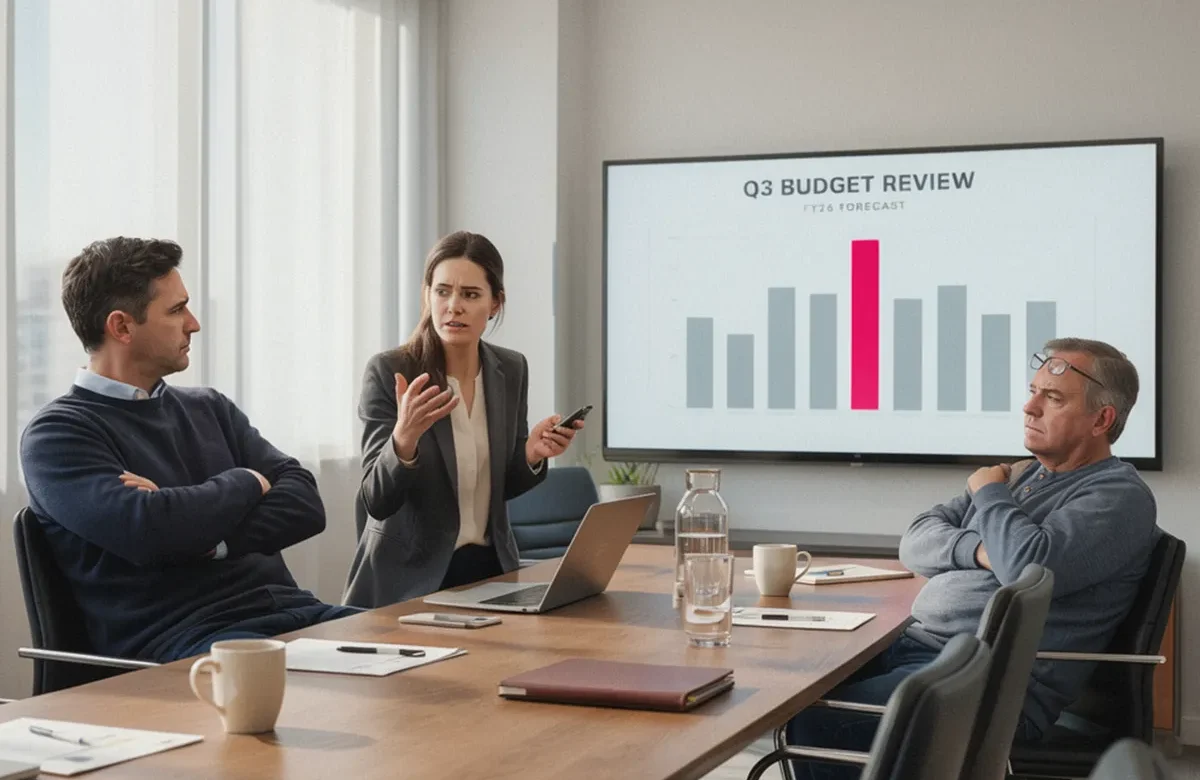
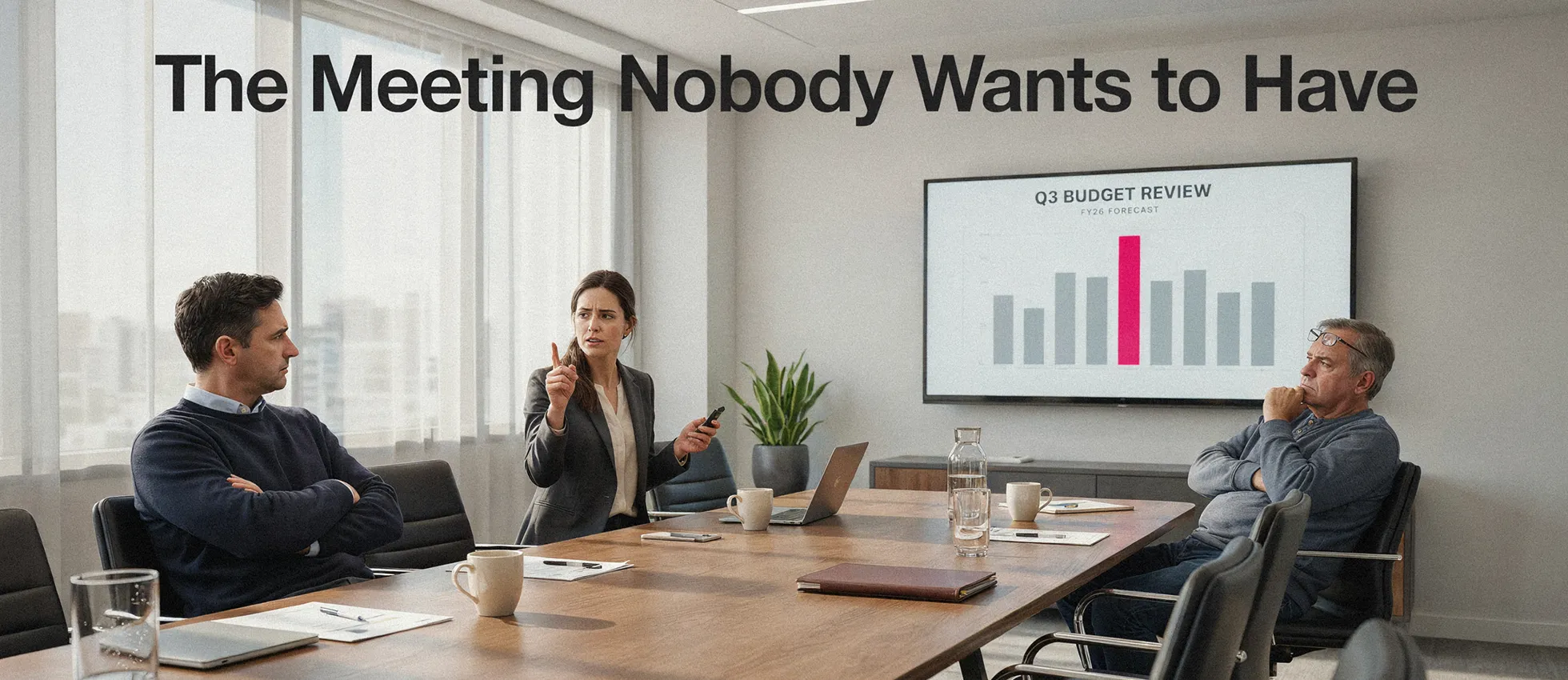
Picture the meeting. It’s you, a spreadsheet, and someone above you asking why next year’s budget looks basically identical to this year’s.
You already know the answer, even if you don’t say it out loud: it’s identical because changing it means having a conversation you’re not ready for. That’s the one where you tell leadership that a chunk of the money going to paid search and paid social needs to move somewhere that won’t show a return for four to six months. Nobody volunteers to be that person, so the plan gets approved looking almost exactly like last year’s.
Here’s why that default is getting expensive, and how to have the meeting anyway.
Why does every marketing budget end up looking like last year’s?
If you’ve sat in a planning meeting and said “let’s keep the same rough percentages and add ten percent for growth,” that instinct makes sense. Changing the split means someone has to justify why, and defending a new idea with a story instead of last year’s numbers feels risky.
So the default wins: same channels, same rough splits, slightly bigger number. It’s the path of least resistance in a room where nobody wants to be wrong out loud.
We sit in these conversations with clients constantly, and the pattern repeats. The budget got frozen around the moment it stopped needing active defense, and nobody has revisited the math since.
Why is the old budget split losing efficiency?
Most marketing budgets are still split roughly the way they were before AI search became a real discovery channel. You’ll usually see heavy paid search, heavy paid social, a small SEO retainer treated as a line item instead of infrastructure, and effectively nothing allocated toward whether AI tools can find and cite the brand.
Meanwhile, the vast majority of websites aren’t structured in a way AI search engines can cite. That isn’t a future risk. It’s the current state of most companies’ digital presence, while the budget deck keeps allocating money the way it did two years ago.
Here’s what makes this a budget problem and not just a marketing one. Every dollar spent on paid acquisition for a brand that’s invisible in AI discovery buys customers the expensive way, through an auction. The brands that do show up in AI recommendations are picking up interest for free before the buyer ever opens an ad platform. That shows up on your scoreboard as cost per acquisition going up for a reason most budget decks never name.
What does an AI visibility gap look like in practice?
We ran this test for a client in the entertainment space. On their core category, they performed well on ChatGPT and showed up as the top recommendation again and again.
Then we looked at the broader discovery questions, the ones a new customer asks before they know your brand exists, and the client was almost completely invisible. It was the same website and the same product. The budget had never been pointed at fixing it, because nobody had the meeting.
The safest-looking budget is the riskiest one, because nobody is defending it anymore.
How do you make the case for reallocating marketing spend?
Here’s how to run the meeting, split into what to say and where the money should go.
1. Frame the ask around cost, not tactics
Don’t open with “we should invest in AI visibility.” Open with “our cost to acquire is rising every quarter, and here’s the specific reason why.” Leadership funds problems tied to a number. They rarely fund tactics tied to a trend.
Do this: pull your cost per acquisition by quarter for the last two years and lead the meeting with that line.
2. Bring the test, not the theory
Before the meeting, run your brand through ChatGPT, Perplexity, and Gemini against your top three competitors. Walking in with “here’s exactly where we’re invisible” is a completely different conversation than “I read that AI search matters now.”
Do this: screenshot the answers where a competitor gets named and you don’t. One slide of those beats ten slides of industry stats.
3. Reallocate in a range, not an all-in move
You don’t need to gut paid media to fund this. Start by shifting 10 to 15 percent of what’s currently going to paid acquisition toward conversion infrastructure and visibility work. That’s small enough to approve without a fight and large enough to move the needle within two quarters.
Do this: propose the shift as a test with a review date, so leadership is approving an experiment instead of a new religion.
4. Set the timeline expectation out loud
Visibility work shows results more slowly than paid media. Say that in the meeting instead of letting someone discover it in month three and panic. “This won’t move fast, and that’s exactly why nobody else is spending here yet” is a stronger sentence than pretending it’ll pay off by next quarter.
Do this: put the four-to-six-month window on the slide so the expectation is set before anyone asks.
What should you do before your next planning meeting?
Pull up your budget from two years ago next to this year’s and see what changed. If the answer is “not much,” this is the year to have the meeting nobody wants to have. The budget split you aren’t defending anymore is the one costing you the most, and the one you revisit and justify every year is the one that stays sharp.
Prefer to watch? [LINK: embed “The Marketing Budget Meeting Nobody Wants to Have” video]
Want the slide that starts the meeting? Our free AI Visibility Snapshot shows your score across ChatGPT, Gemini, Copilot, and Perplexity, plus how you rank against up to three competitors. [LINK: Free AI Visibility Snapshot]
Want help building the numbers behind the ask? [LINK: Book a call with Darrell]
FAQ
Why do marketing budgets stay the same year after year?
Changing the split means someone has to justify the change, so teams default to last year’s percentages plus a growth bump. The budget stops getting defended and starts getting copied.
How much of a marketing budget should move to AI visibility?
A practical starting point is 10 to 15 percent of what currently goes to paid acquisition, shifted toward conversion infrastructure and visibility work. That’s small enough to approve and large enough to show movement within two quarters.
How long does AI visibility work take to show results?
Expect a slower ramp than paid media, roughly four to six months before the return is clear. Setting that expectation up front keeps the investment from getting cut too early.
How do I convince my CFO to reallocate marketing spend?
Lead with rising cost per acquisition and a specific reason for it, then show a real test of where your brand is invisible in AI search compared to competitors. Leadership funds problems tied to a number.